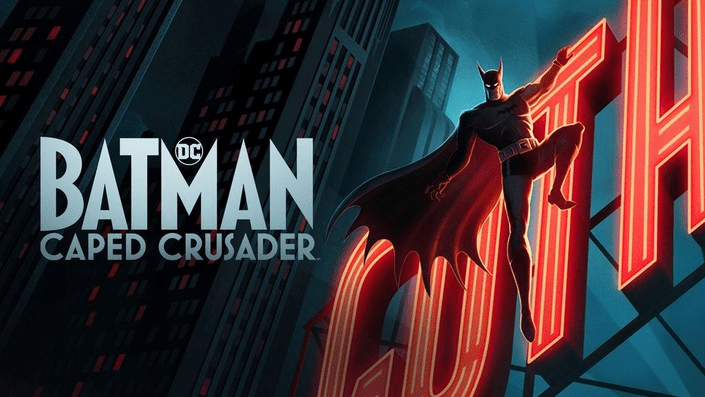
After years of struggles to even get the show released, Batman: Caped Crusader finally hit Prime Video on August 1st 2024, and after reviewing each episode individually it’s now time to dissect the entire season and dole out some rankings!

If you’ve never read one of my season reviews I’ll just quickly explain that I maintain a spreadsheet that tracks the point totals from each episode, and in turn the various directors, writers, composers and animation studios that worked on them. This is just for my own satisfaction and shouldn’t be taken too seriously, as I often disagree with the raw data. After all, a ‘bad’ episode could have great direction and the director would still be punished for it through my method. I try to break that down in each section and delve into my thoughts vs the raw numbers.
(Frederik Weidman composed every single episode so there’s no point in doing a ranking there. He wins! And loses!)
There’s also a lengthier season review section, as well as rankings for the episodes and villains along with a little bit of commentary on how those lists shook out in the end compared to breaking down the placements in a vacuum in the individual episode reviews.
You know what? You’re smart and this isn’t, so you’ll figure it out!
Season Review
Strengths: Visuals, Period Aesthetic, Subtle Serialisation
Weaknesses: Voice Acting, Villains, Flat Ending
Batman: Caped Crusader is not BTAS. Let that go immediately or you’re not going to have a good time at all. BTAS still exists and you’re welcome to go and rewatch it forever. But we’re here to give a new show a fair shake. That being said it’s difficult to not bring up BTAS given the shared DNA so I’m still going to do it… but in a nuanced way, I swear!
I found this series more difficult to write about than BTAS or STAS, which are both more formulaic by design as they were syndicated children’s cartoons. Caped Crusader is fundamentally a more sophisticated show than anything in the old DCAU. That is NOT a value judgement, because I definitely don’t think it’s ‘better’, but because it’s trying to do more than those shows were, it means there’s more to pick over and write about. Sometimes that’s a strength, with some of my favourite episodes doing a terrific job of juggling multiple plot threads and peppering in some lovely character development, as well as a sense of subtle serialisation that I’ll get into more in a bit. Sometimes however that can be its downfall, as its attempts to do something more can prevent things from properly coming together, versus BTAS frequently following a blueprint that provided a baseline level of satisfaction. You know if nothing else you’d probably get some combination of a big sexy villain, great voice acting, a sense of style and great music.
Caped Crusader is a mixed bag in these regards. The music is generally good but not prominent enough, and Frederik Weidmann is definitely not Shirley Walker. I think the opening and closing title piece is really good though and immediately set the tone. The voice acting and villains are a bit of a weakness, trading in the delightful theatrical performers of the old DCAU for serviceable but mostly uninspired performers. I struggled to champion anybody in most episodes and couldn’t point to a single ‘big’ performance in the entire season, though many are still good, such as Jamie Chung as Harley Quinn, Paul Scheer as the Cobblepot boys, and Jason Watkins as Alfred. You’ll note I did not list Hamish Linklater as Batman. I don’t think he was bad by any means, and he certainly has his moments, but they’re just less emphatic compared to some of the great animated Batmen we’ve had over the years. Similarly the villains may be a bit of a let down for some. Much more on that below, but the Season One offering is a little lacking, with a trio of bright spots. I do think these things are somewhat linked, and the advent of more villains in Season Two should also lead to better voice acting, but given these were such strengths for BTAS, it is a smidge disappointing the same isn’t true here.
That being said, in my opinion it’s absolutely up to the task of picking up its spiritual predecessor’s penchant for visual flair. The art design is absolutely perfect, taking advantage of all the ways technology has improved animation in the last 30 years while maintaining the essence of the classic Bruce Timm style. Every single costume and character is gorgeous, perfectly adjusted to their chosen time period of the 1940s. BTAS had a little bit of an anachronistic vibe to it early on, with black and white televisions and outdated vehicles, but it was clearly set in the present if you paid attention. By contrast one of the biggest strengths of Caped Crusader is that it commits hard to the era. I got a real kick out of Bruce’s more luddite methods of detection, the old timey movie studio, and of course the sartorial choices for the characters and wonderful look of Gotham. I’m not going to do the cliche ‘Gotham is one of the characters!’, but I do think setting is really important, and while I could have gone for a few more innocent bystanders and background extras, I dig the look of the city.
On top of that, many of my favourite animation elements are here, from the clever use of shadow and light, to drawing Batman as a supernatural force with bright white eyes and a number of other little stylistic flourishes. They opted against title cards (though there are animated versions created as social media marketing, included in each of my episode reviews!), but do have a compromise of sorts that many may not have even noticed; They include two key locations from each episode, one as the final shot of the opening titles, and the other over the end credits… which auto-skip quickly unless you intervene. Thanks, streaming! So the impetus was there, but it is a shame they didn’t go the whole hog and just do the damn thing everybody loved about their old show! I figure Bruce Timm wants to make sure people know this isn’t meant to just be ‘More BTAS‘ so he doesn’t want to replicate them entirely, but everybody else involved wanted to, so this was his solution. It’s still cool, but I think they could spotlight these strong backgrounds even more. Especially as the episode names are evocative of old pulp movies, so would suit the title cards even more.
But to return to where I started, the other thing that really sets this show apart from BTAS is its decision to eschew the episodic format and embrace serialisation. This is an odd thing for me to praise because I think the streaming era is slowly destroying television, specifically the art of a killer episode. Believe me, I’d forgive you for seeing me talk about an ongoing story in a streaming-exclusive series as a huge red flag, but hear me out. The show is largely episodic, with not many cliffhanger endings and only the final two episodes being spiritually a part one/part two situation even if they aren’t labelled as such. The episodes are mostly self-contained and tell satisfying and complete stories, with a bit of a ‘case of the week’ feel to many of them. The serialised elements are instead more peripheral.
The biggest of these are Batman’s icy exterior (perhaps the coldest he has ever been) slowly thawing across the season, the social commentary, and the ongoing stories of the GCPD. The first is perhaps too slow for some, who find Batman’s roboticism frustrating as he exclusively calls Alfred by his last name until the end of the season, but I thought it was actually well done, especially on a second watch. Our hero fails in the first episode, forms a one-sided ‘partnership’ with Montoya in the second, goes to mandated therapy and saves Catwoman in the third, helps Jim Gordon save lives in the fourth, is rescued by Barbara Gordon in the fifth, confesses his love for Alfred in the sixth, works tirelessly to save the Gordons and some orphans in the seventh and eighth, and then desperately tries and fails to pull his friend Harvey Dent back from the edge in the ninth and tenth. That’s a pretty simple but effective journey, with him opening up little by little to Alfred, Montoya and the Gordons. We started with a Batman that emphatically worked alone, and finished with one that may be more amenable to teamwork.
The other two overarching aspects are slightly more wobbly. There are small ways in which it works decently, like the gradual changes in attitude toward Batman by the GCPD, and the mention of Bruce’s affordable housing in Episode 6 followed by the Gordons taking refuge in the under-construction Wayne Gardens in Episode 7, an idyllic white picket fence housing development. Emphasis on white. On that note, they make an attempt to not shy away from the harsh realities of their chosen setting, with subtle remarks about Gordon’s race and Montoya’s sexuality. The issue is they don’t have the time or language to engage with these topics in more than a cursory fashion. Bruce Timm has talked about this with BTAS where an early story editor (Sean Catherine Derek) wanted to do more morality tales but he felt they just couldn’t do them justice so preferred to not bother at all. They are trying a bit more here, and that’s part of how it’s a more sophisticated show, but the jury is still out for me when it comes to how well they make good on these ideas. If all you watch is franchise content this stuff will feel either feel extremely heavy handed or possibly even ‘Deep’… but I wish they went even further with it. Look no further than the finale where they simply kill Harvey Dent before they’re forced to make an ethical ruling on the notion of him getting a plea bargain to rat on more corruption in Gotham.
Speaking of Harvey Dent, his arc is perhaps the biggest shortcoming of the serialisation. I genuinely believe it’s important to establish Harvey as a person before his transformation into Two-Face, ideally as one of Bruce’s only friends, so that when the turn comes it feels like a gut punch. The writers clearly agree as Dent is in almost every episode before acid is chucked in his face at the end of ‘Nocturne‘ to set up his quasi-two-parter. Unfortunately he’s just not written compellingly enough for the most part, with only a couple of bright spots, which detracts hugely from the ending. They were relying heavily on the emotions at play instead of delivering an ending that was satisfying in its own right and instead it all fell a bit flat. A classic putting too many eggs in one basket situation. If the Harvey stuff doesn’t work what are you really left with for those 25 minutes?
While there are a number of negatives in there, I don’t believe any of this detracts from the quality of the show, and its flaws are more to do with the voice acting and sense of ‘oomph’. It’s more about what is not here than them doing anything overly ‘wrong.’ The series has a tonne of potential, but needs to up its game with the villains and cast, which feels more of a nuts and bolts afterthought than an essential ingredient. But I’m still absolutely thrilled this show has finally been released after some dark days of development hell. I believe it’s the best Batman series since BTAS (though I have not seen The Brave and the Bold), and would very much like more episodes ASAP, please! There’s definite room for improvement, but it’s a great start and has an extremely strong sense of identity. Every version of Batman is valid, and pigeonholing him into a single vision is bad for the character, so I’ll take as many takes as specific as this as people care to produce. The disposable nature of streaming and sensationalism of social media mean it’s been somewhat dismissed already when it deserves to be fully embraced as the cool new thing that it is. Thumbs up!
Director Rankings
- Matt Peters (Eps. 2, 5, 8)
- Christopher Berkeley (Eps. 3, 6, 9)
- Christina Sotta (Eps. 1, 4, 7, 10)
I couldn’t really point to any of this trio of directors actually being better or worse than the others and feel the direction was consistently good throughout.
For instance while Sotta handled three of my bottom four, she also oversaw multiple instances of Batman emerging from fog/smoke to take dudes out one by one, which is extremely my shit. Peters may have done both my of top two… but he also did my least favourite episode. Berkeley did my third favourite episode and then two from the middle. So as is often the case with these dumb rankings driven purely by numbers… I think it’s in no way reflective of their talent.
Writer Rankings
- Greg Rucka (Ep. 2)
- Ed Brubaker (Eps. 3, 4, 10)
- Adamma & Adanne Ebo (Eps. 3, 7)
- Bruce Timm (Eps. 1, 3)
- Marc Bernardin (Ep. 6)
- Halley Gross (Eps. 5, 8)
- Jase Ricci (Eps. 1, 9)
(The average points for Bernardin, Brubaker, Timm and the Ebbo sisters were actually tied, so I ranked them base on their totals)
The one area I think has some actual value when looking at this stuff is the writing, especially because I think I can better comment on where the various scribes from the first season fall in the raw numbers rankings compared to my thoughts on their actual quality. It’s also the category where you’re most likely to see one of the participants only work on a single episode, which can HUGELY skew the list. Plus you have the distinction of a story credit vs a teleplay credit. Basically writing is messy but I feel better qualified to talk about it.
I say that to say I largely agree with the above, and it’s not surprising that comic book legends Rucka and Brubaker placed high given their experience with penning Batman stories. Rucka only wrote one episode, but it was my favourite, while Brubaker did two I liked a lot and one I didn’t care for as much, while also serving as lead writer for the entire season. There’s absolutely no way that he didn’t influence the writing of Montoya and the GCPD given his work on Gotham Central (along with Rucka!), hence a number of the characters appearing as cops with 1-2 lines in a couple of episodes. This is just a gut feeling, but I would imagine the serialised cop stories are a product of Brubaker, so it’ll be interesting to see what happens with the second season which he was unavailable for.
Next up, Adamma & Adanne Ebo, who may not have many writing credits, but seem to be names to watch for the future. Again, purely a guess, but I suspect they wrote Bruce’s therapy scenes in episode three, which I thought were really strong. Their episodes also dealt heavily with police corruption, and between them and Brubaker we got the most extreme moments from Flass, Bullock and Corrigan. I don’t know if there’s any truth to the idea that at one point HBO were looking to do an adaptation of Gotham Central with Matt Reeves executive producing… but it would make a lot of sense if that project falling apart led to this quartet of writers coming aboard Caped Crusader. While I’m sad Brubaker won’t be around for the second season, the Ebo sisters being producers is encouraging.
Next, Bruce Timm sucks up his traditional story credits that have often allowed him to rank highly on these lists despite not actually being a writer. Never change, Bruce! (Jokes aside, I have absolutely no doubt he has always been HEAVILY involved in creative decisions and the various shows wouldn’t be as good as they were without him.)
From there downward I don’t really know what to make of the rest. Marc Bernardin only did the one episode so came out ahead of Halley Gross, who did one episode I loved and the only one I actively disliked. I wouldn’t confidently say that means Bernardin is a better writer than Gross, but the numbers work how they do. Finally I would probably agree Jase Ricci is the weakest writer of this group, but I didn’t hate his episodes by any means.
Animation Studio Rankings
- Studio Grida (Eps. 3, 5, 7, 9)
- Studio IAM (Eps. 1, 2, 4, 6, 8, 10)
Only two animation studios worked on the show, Studio IAM and Studio Grida. Much like with the directors, I can’t say I could spot a difference in quality between them (Bruce Timm likes it that way), so now more than ever these numbers are deeply flawed and based entirely on the overall rankings of the episodes they worked on.
Basically Studio Grida did two of my top three, and their other two episodes fell in the middle, while IAM did my favourite episode… and my bottom three. Pure numbers game, both seem good!
Episode Ranking
Just in case you skipped straight to the season review and haven’t followed my episode by episode rankings.
- … And Be a Villain (S1.E2)
- The Stress of Her Regard (S1.E5)
- Kiss of the Catwoman (S1.E3)
- The Night of the Hunters (S1.E4)
- Night Ride (S1.E6)
- The Killer Inside Me (S1.E9)
- Moving Target (S1.E7)
- In Treacherous Waters (S1.E1)
- Savage Night (S1.E10)
- Nocturne (S1.E8)
Basically I think they struggled to open and close, but hit a really strong run from episodes 2 to 6, with the top two standing a decent way above the rest. Likewise I’m pretty firm on the bottom two. The rest are split into ‘Yeah, I enjoyed that’ and ‘This wasn’t great but there was still something here.’ Wow! Such art critic!
I think from a purely screenwriting perspective the Harley and Catwoman episodes are probably the best in the season as they do a great deal of character work and juggling of multiple threads, but I just adore the old timey movie set aesthetic of Clayface’s episode, and it gives you a nice self-contained detective story, which should be the default setting for the show.
On the other end of things I think both the carnival and finale episodes just don’t have a strong enough through-line and threaten to fall apart at the seams. ‘Nocturne’ is the only one I’d call actively bad though to be honest, with ‘Savage Night’ just not being quite strong enough to serve as a season finale.
Rogues Roundup
Again, purely for those that skipped the episode-by-episode reviews. I would say the villains are one of the weaker aspects of this show. They all have excellent throwback looks (the visuals and setting are among the strongest things in the show), and they all get at least one really cool moment, but about two-thirds of them are kind of just…. there.
- Clayface
- Harley Quinn
- Catwoman
- Two-Face
- Firebug
- The Gentleman Ghost
- Flass & Bullock
- Rupert Thorne
- The Penguin
- Onomatopoeia
- Jim Corrigan
- Nocturna
- The Joker
Unsurprisingly my top 3 villains match my top 3 episodes exactly. The Rogues Gallery were a huge part of BTAS‘ success, with most people’s favourite episodes being spotlights on excellently written, drawn and voiced villains. This series is going for something a little different… but I can’t deny that it just sings when the villains are firing on all cylinders.
Joker is mostly at the bottom by default as he says one word as a teaser at the end of the season. I found Nocturna to be the only actively bad character from the list… again perfectly mirroring the placement of her focus episode as the only one I think was genuinely poor. The rest of the bottom half just didn’t have large enough roles to reach the heights we’ve come to expect of Batman media.
I think they have the ability to elevate the villains in a sophomore season, with many of the ones they’ve already used still on the table to play with, most notably Joker, Harley and Catwoman. Clayface didn’t actually die, either, but I don’t know if this version should be brought back as it might dilute his effectiveness. Rupert Thorne and the corrupt cops will return too, but I’m slightly less jazzed about that unless they kick things up a notch.
And then there’s all the heavy hitters that didn’t appear, such as Poison Ivy (noir femme fatale Pamela Isley now please), Scarecrow (name-dropped), Mr. Freeze (possibly teased in a newspaper easter egg), Riddler, Mad Hatter and maaaaybe Ra’s al Ghul (they leaned into the Bond Film vibes with him in BTAS, so could have a lot of fun with him in this setting.) Paul Dini & Alan Burnett incorporated the Court of Owls into their BTAS continuation comic, but I feel like Bruce Timm is a bit more of a traditionalist and was reluctant to use Bane in BTAS, so I wouldn’t count on either of those. Man-Bat and Killer Croc (appeared in the carnival episode) would fit their Universal Monsters inspiration too. But I also enjoyed their impulse to incorporate some slightly deeper cuts and hope they have room for both that and the obligatory heavy hitters.
Basically I do think they’ll improve and they have a tonne of options to go with, but it was a bit light in this debut season.
 The Matt Signal
Leave a comment